August 4, 2023
by Elizabeth Pratt

Children who read for pleasure experience better mental health during adolescence as well as superior performance in cognitive tests.
Research published in Psychological Medicine found that roughly 12 hours of reading per week was the perfect amount associated with an improvement in brain structure.
[More]
August 1, 2023
by Patricia Tomasi

A recent study looked at paternal and maternal psychiatric history and risk of preterm and early term birth. It was a nation-wide study using Swedish registers. “It has been known for some time that women who are clinically anxious or depressed are more likely to deliver a child prematurely,” study author Michael E. Silverman told us. “Indeed, considerable evidence now exists showing a relationship between various psychiatric illnesses and the likelihood of delivering a premature infant.”
[More]
July 31, 2023
by Elizabeth Pratt

Ever heard that laughter is the best medicine? Now science backs it up.
Researchers at the University of Warwick in the UK have found that both laughter and humor are important tools that can impact wellbeing, particularly in the workplace and in health related settings.
[More]
July 30, 2023
by Elizabeth Pratt
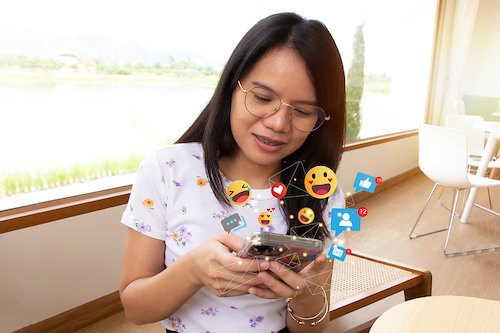
Cutting back on social media use can improve psychological wellbeing.
Researchers at Iowa State University found that students who limited social media use to just 30 minutes a day has lower scores for depression, anxiety, loneliness and the fear of missing out.
[More]
July 25, 2023
by Patricia Tomasi

A recent article published in the Journal of Professional Psychology, Research and Practice looked at emotional support animal assessments and the importance of creating a standard and comprehensive model for mental health professionals. “This is the third in a series of articles that address emotional support animals and the appropriate role of professionals certifying these pets for their patients,” researcher, Leisl Bryant told us.
[More]
July 18, 2023
by Patricia Tomasi

A new study published in the Journal of Family and Community Health looked at parental sexuality disclosure, discrimination, and depression among Black sexual minority men and Black transgender women. “There were two main goals of our study,” study author, Rodman E. Turpin told us. “First, we wanted to identify the relationship between discrimination and depression among Black sexual minority men and Black transgender women. Discrimination experienced by these populations can include social and structural racism, homophobia, transphobia, and more, so we used a comprehensive measure of discrimination for our study.”
[More]
July 11, 2023
by Patricia Tomasi

A new study published in the Journal of Rural Sociology looked at the built environmental and social and emotional support among rural older adults and whether there is a case for social infrastructure and attention to ethnoracial differences. “In this study, we were interested in determining if and how older adult social and emotional health is associated with social infrastructure availability in rural contexts,” study author Danielle Rhubart told us.
[More]
July 4, 2023
by Patricia Tomasi

A new study published in the Journal of Psychological Medicine looked at early-initiated childhood reading for pleasure and its associations with better cognitive performance, mental well-being and brain structure in early teens. “I and my co-authors wanted to understand the effects of reading for pleasure in young children on brain structure, cognition, school academic achievement and mental health,” study author Barbara J. Shakahian told us. “Some of the previously published literature suggested that there should be beneficial effects on cognition, but there had not been a very large scale study, with over 10,000 adolescents before on all these measures together.”
[More]
June 30, 2023
by Elizabeth Pratt

The US Preventive Services Task Force has recommended adults under the age of 65 be screened for anxiety disorders.
This is the first time anxiety screening for this group has been recommended.
[More]
June 29, 2023
by Elizabeth Pratt

Employees who have frequent interaction with artificial intelligence systems are more likely to be lonely.
Research published by the American Psychological Association found that the loneliness experienced by the employees could lead to insomnia as well as after work drinking.
[More]