May 17, 2022
by Patricia Tomasi
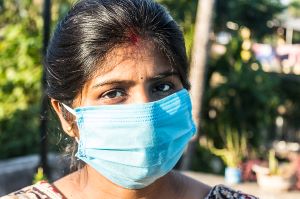
A new study published in the Journal of Development Economics looked at women’s wellbeing in India during the pandemic and its containment. “Our aim was to study how the pandemic and its containment policies affected women's mental wellbeing and food security, in a low income setting,” study author Gaurav Khanna told us. “We wanted to find out how strongly affected women were as they are particularly vulnerable in such settings.”
[More]
October 12, 2021
by Patricia Tomasi
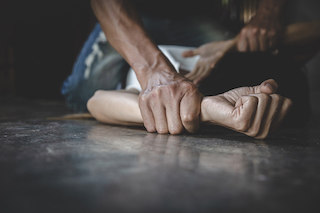
A new study published in the Journal of Brain Imaging Behaviour looked at sexual assault and white matter hyperintensities among midlife women. “Adverse mental health implications of trauma and sexual assault have been studied extensively over the years, yet much of this research wasn’t spotlighted before the advent of the #MeToo movement several years ago,” study author Dr. Rebecca Thurston told us. “There has been some work, including my own research, which linked experiences of trauma and sexual assault to the underlying cardiovascular disease risk in women. However, much less is known about what these traumatic experiences may mean for a woman’s risk of serious brain disorders such as stroke and dementia.”
[More]
August 17, 2021
by Patricia Tomasi
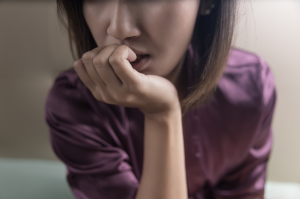
A new study published in the Journal of Psychopharmacology looked at sex differences in specific aspects of two animal tests of anxiety-like behavior. “We studied male and female rodent models to better understand sex differences in biological responses related to anxiety,” study author Thatiane De Oliveira Sergio told us. “We used procedures that let us measure a lot of different aspects of the anxiety behavior.”
[More]
January 3, 2020
by Tina Arnoldi

Imposter syndrome has a significant impact on women entrepreneurs as discussed in an earlier post. Moving beyond imposter syndrome isn’t about denying it. While belief about lack of ability may be a real thing in some cases, there are ways to manage it.
[More]
October 1, 2019
by Patricia Tomasi
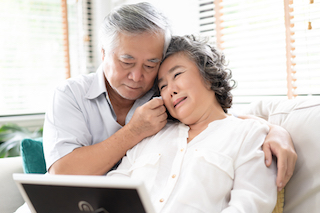
Stress is on the rise for women and it can lead to a host of health problems over the lifespan including depression, anxiety, obesity, and Alzheimer’s disease, an incurable brain disorder that destroys memory and the ability to perform simple tasks. Women, in fact, are more likely than men to develop Alzheimer’s disease. At first, researchers thought this was because women lived longer than men, however, more and more research is pointing to other factors, including stress.
[More]
March 20, 2018
by Patricia Tomasi

Researchers ponder how to adequately treat pregnant and postpartum women addicted to opioids as the news of the opioid crisis continues to grab headlines across North America.
[More]
In August 2015 the Food and Drug Administration approved the first pill designed to treat lowered sexual desire in women. Depending on who is speaking, this decision is either revolutionary, a breakthrough to marvel at and sign of progress because it promotes the viewpoint that low sexual desire is a biological reality versus something existing solely in a woman’s head. Or it’s a mistake caused by the F.D.A collapsing from the pressure created by various lobby groups and a sad reflection of society’s penchant of viewing the aging process as something that needs to be fixed rather than accepted.
[More]
There is a looming deadline in the military that is causing a fundamental change in the way that American military training is conducted. Beginning in January 2016, the Pentagon has mandated that combat roles must be opened to women in all branches of the military. While all other sectors of the military have been integrated for some time, combat roles have until now continued to be a men only operation. The scope of the integration is staggering, as up until now the entire sector of special forces has been almost completely closed to women. Opening up these physically, psychologically and even socially rigorous areas of combat service is not simple, nor is it easy.
[More]
The FIFA World Cup is the most watched and followed broadcast event on Earth, more watched than the Olympics or the Super Bowl. Type it into any search engine or ask someone on the street and the answer is always the same; the World Cup is THE soccer championship. Yet when people speak about the World Cup, they are actually excluding half of the population. The FIFA World Cup is in actuality the FIFA Men’s World Cup. There is a separate soccer championship for women, called the FIFA Women’s World Cup, being played this year in Canada from June 6th to July 5th. It has a wholly different set of rules and regulations, and a wholly different place in the history of soccer. Up until recently women’s soccer has been a footnote, but that history might be changing.
[More]
February 19, 2015
by Tracy Busse, MA, LPC
In the last year, the chilling actions of ISIS and Boko Haram have shocked many. Americans have questioned their barbaric practices and lack of regard for women. It is hard to imagine something like that happening in America. As stories of survivors are released, hearts sink when they hear of women and children being forced into marriage and raped by militants (Those, 2014). But what if these same injustices were happening in the United States? Perhaps they are.
[More]