January 25, 2022
by Patricia Tomasi
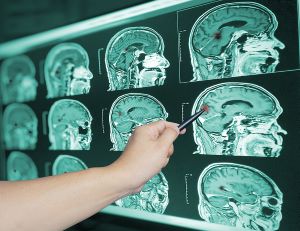
A new study published in the Journal of Neuroscience looked at visual processes in the brain. “We were focusing particularly in the older part of the brain or mid-brain, which is important for lower-order animals such as frogs, lizards, and birds,” study author Masatoshi Kasai told us. “The superior colliculus is the center for sensory integration and sensory-motor transformation.”
[More]
September 21, 2021
by Patricia Tomasi

A new study published in the Journal of Translational Psychiatry looked at a combined clinical and genetic approach to the assessment of suicide and death in bipolar affective disorder. “When we think about the risk for suicide, we often think about what is happening in a person’s life at the time: the loss of a job, a major change in a relationship,” study author Eric Monson told us. “Not many people are aware that genetics play an important role in risk. In fact, the heritability for suicidality is estimated to be 30-50%, meaning that a significant proportion of risk arises from genetic sources.”
[More]
August 30, 2021
by Elizabeth Pratt

The majority of children with attention deficit hyperactive disorder (ADHD) won’t outgrow the disorder.
A study published in the American Journal of Psychiatry found that just 10 percent of children with ADHD will completely outgrow it.
[More]
November 17, 2020
by Patricia Tomasi
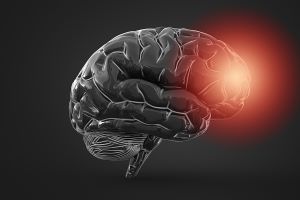
A new study published in the Proceedings of the National Academy of Sciences of the United States of America looked at the brain and impulsiveness. “In this study we investigated how the locus coeruleus (LC), the main source of norepinephrine (NE) in the brain, regulates attention and impulsivity,” study author Andrea Bari told us. “These cognitive functions are essential in everyday life and found to be impaired to various degrees in several pathologies, most prominently in children with attention deficit / hyperactivity disorder (ADHD).”
[More]
September 25, 2020
by Elizabeth Pratt

ADHD-like behavior caused by lack of sleep may be beneficial for entrepreneurial activity.
For some people, bad sleep can result in feelings of hyperactivity the following day, along with impulsive behavior and shifting attention spans. These behaviours all resemble those of ADHD.
Now a new study suggests this could lend itself to entrepreneurial behavior.
[More]
January 14, 2020
by Patricia Tomasi

A recent study examined whether extreme adversity early in life can have a long-lasting impact on brain development. Previous research shows that early childhood adversity is linked to a higher risk for a wide range of neurodevelopmental and psychiatric problems later in life. This study examined whether early adversity is also linked to changes in brain structure and whether these brain changes can partly explain why some individuals develop persisting neurodevelopmental problems, such as attention-deficit/hyperactivity disorder (ADHD), following adversity while others do not
[More]
October 29, 2019
by Patricia Tomasi

A new study, titled, Associations between parenting stress, parent mental health and child sleep problems for children with ADHD and ASD, looked at whether sleep problems experienced by children with Attention Deficit Hyperactivity Disorder (ADHD) and Autism Spectrum Disorder (ASD) were connected to parenting stress. About one in 59 children in the U.S. has been diagnosed with ASD and like ADHD, and it’s more common in boys than girls, about four times more common. One in 37 boys and one in 151 girls were diagnosed with ASD in 2018.
[More]
June 18, 2019
by Patricia Tomasi

Attention Deficit Hyperactivity Disorder, or ADHD, as it's commonly known, is on the rise. But why? Is it just that we’re becoming more aware and accepting of the disorder or is something else causing the increase? “It was already known that children with ADHD have higher omega-6 to omega-3 ratios,” researcher Monica Lopez told us, “so we wanted to test whether these higher omega-6 to omega-3 ratios were involved in the origin of the symptoms.”
[More]
May 14, 2019
by Patricia Tomasi

A new study from the University of Waterloo, published in Scientific Reports, aimed to examine the way we learn to perceive the passage of time. Is time perception rigidly fixed in the brain, or is it flexible and open to change? If the latter, how rapidly can our brain adapt to changes in timing statistics?
[More]
January 29, 2019
by Patricia Tomasi

According to a new study published in JAMA Pediatrics, compared to later-born siblings of non-diagnosed children, later-born siblings of children with autism were more likely to be diagnosed with autism or with ADHD. Likewise, compared to later-born siblings of non-diagnosed children, later-born siblings of children with ADHD were more likely to be diagnosed with ADHD or with autism.
[More]