

Anger Therapist
Susan Yun, MA., CCC., CPC.
Canadian Certified Counsellor
In T6J 5R5 - Nearby to Fort Saskatchewan.
My approach to anger management is to reduce both your emotional feelings and the physiological arousal that comes with it. We can work together to identify triggers, recognize your triggers, manage your emotions, and feel calmer by mindfully approaching your anger so that you not only regulate your emotions but also listen to your own intense emotions and then work on rewiring your brain to peace. I use Interpersonal Neurobiology to help you understand the way your brain works so that you can control your anger instead of your anger takes control of your life

Anger Therapist
Kevin Alderson, Ph.D.
Registered Psychologist (Alberta and Ontario)
In T5N 3Y8 - Nearby to Fort Saskatchewan.
[I OFFER VIDEO SESSIONS THROUGHOUT ALBERTA AND ONTARIO]. Anger has gotten the better of you and it is time to do something about that now. Come see me. I have been a psychologist since 1986 and I know how to help people. I often use cognitive behaviour therapy, mindfulness meditation, hypnotherapy, and several other helpful methods to bring down your overall arousal level. Bring some calmness of spirit into your life right away and book a session with me by visiting https://app.acuityscheduling.com/schedule.php?owner=14249112

Anger Therapist
Angie Allan, MEd
Registered Provisional Psychologist
In T5Y 0A3 - Nearby to Fort Saskatchewan.
Anger management counseling can help to identify stressors and learn the steps to stay calm in the face of anger. The goal is to handle tense situations in more constructive and positive ways by reducing the emotional and physical arousal that anger can cause. It will provide the tools to take back your life and resolve the triggers that result in unplanned anger reactions.

Anger Therapist
Rivers Edge Counselling Centre, Inc.
Rivers Edge Counselling Centre
In T6V 0A1 - Nearby to Fort Saskatchewan.
Our therapists are trained in strategies to help you effectively manage your anger and other difficult emotions, as well as improve communication skills for healthy relationships. Some of the strategies we use to help with anger management are: mindfulness, cognitive-behavioural therapy and solution focused approaches. Learn to regulate emotions and tap into a sense of peace and clam, even in the midst of life's storms!
Anger Therapist
Kyle Sobey, RSW, Clinical MSW
Registered Social Worker and Therapist
In T6C 0K1 - Nearby to Fort Saskatchewan.
What's your relationship with anger like? Is it the only emotion that's allowed out or maybe it's one that feels too unsafe, like you can't trust yourself to express anger, so you suppress and bottle it up, causing you to feel worse. Maybe you don't want to feel angry, but it feels justified. Maybe you turn that anger inwards towards yourself. You may be really self-critical. Anger can cause a lot of suffering to us and those around us, so it can be important to work on changing the relationship we have with it. I can work with you to better understand your anger and other emotions and to change how you interact with them, so it causes you and those around you less suffering.

Anger Therapist
Patrick Schiller, MEd., R. Psych.
Registered Psychologist
In T5K 1C5 - Nearby to Fort Saskatchewan.
Anger is a natural emotional response that occurs when something that we value gets squashed or stepped on by the world around us. You may be experiencing a great deal of anger without fully understanding the thing that you value that is being squashed. I will work with you to discover understanding of your anger and to uncover the ways in which anger has become problematic in your life. I will walk with you on the path to overcoming the destructive impact of anger, and to resolve the situations which lead to unhelpful anger.

Anger Therapist
ShiftGrit Psychology & Counselling, R. Psych, MACP, MSW, RSW
Psychologists, Counselor, Child Psychologist, Marriage Counsellor, Mental Health Clinic, Mental Health Service, Social Workers
In T5N 1R7 - Nearby to Fort Saskatchewan.
Anger can be a healthy response to negative treatment or events. We’ve all gotten angry and it can help to communicate to others that we’re not okay with something. In fact, not having the ability to feel anger is a whole other issue. However, for some people, uncontrollable, overly frequent or inappropriate expressions of anger can damage relationships, career success or more. Shift Psychological can help the anger management process by identifying and treating the origins of the anger – the messages about self and the world that cause it. Then, using our unique approach we remove them. This results in an absence of reaction and an appropriate level of calm.

Anger Therapist
Compassionate Counselling Inc., Therapists
Compassionate Counselling Inc.
In T6E 1T4 - Nearby to Fort Saskatchewan.
Anger can be a healthy reaction to upsetting events, but when expressed aggressively it is very destructive. You can learn how to calm your anger and channel it in a healthy way. Anxiety is often a contributor to angry outbursts. When you are tense, worried, insecure and perfectionistic anger easily surfaces. Addressing the underlying causes of anger enables you to disengage from destructive patterns and improve your relationships.

Anger Therapist
Jack Lewis, R.Psych., C. Psychol., AFBPSs.
Registered Psychologist
In T8N 5A7 - Nearby to Fort Saskatchewan.
Managing anger means managing your need to have things your way even if your way seems reasonable to you. It means questioning your sense of entitlement to having your way. Anger can be a strong communication to others that what one is angry about really matters. As an initial response it can be a powerful impetus to change but unless one takes some kind of action following the anger it will only serve to reinforce a sense of powerlessness. Anger can be a way to impose ones will. Sometimes people learn that this works in the short term but in the long term it never really does.

Anger Therapist
Kirthana Ramani, M.Sc., R.Psych.
Registered Psychologist
In T5K 1C5 - Nearby to Fort Saskatchewan.
If you are struggling with a hot temper and with controlling your anger, know that you are not alone and that it is normal to feel angry now and then. Are you finding that anger is taking over your life? Is it ruining relationships and your peace of mind? This can become very overwhelming to deal with. I can work with you to help you manage your anger. We can work together to understand where it comes from and in this process, learn to deal with it better using various techniques tailored to your unique personality and situation.

Anger Therapist
Faithful Therapist, PhD
Registered Psychologist
In T6E 1T4 - Nearby to Fort Saskatchewan.
Anger is an emotion that can be very destructive to yourself and others. There is, however, a healthy side of anger if it is used for good. Anger can be communicating something very important about what kind of expectations you have of yourself and others. It may also be an indicator that you are tolerating something that doesn’t feel okay. Sometimes aNiger informs us that we are taking other peoples behavior personally. When we learn to value ourselves, say no and focus on Devine love anger is transformed.
Anger Therapist
Tim Garner, MC, CCC
Canadian Certified Counsellor
Available for Online Therapy
Feeling like you always go from 0 to 100 in seconds? Do people say you overreact to small things, or do you feel constantly on-edge? Maybe your anger is hurting the people you care about. If any of this sounds familiar, counselling can help. Together, we can develop better emotional control, improve your relationships, and reduce your stress. You'll gain insights into your triggers and learn how to manage them. Imagine feeling calm and connected with the people you love. You deserve this peace. Let's take the first step together. Book your free 15-minute consultation now, and start your journey to a more peaceful life today.

Anger Therapist
Shannon Loewen, R.Psych, MSc.
Registered Psychologist
Available for Online Therapy
When we can learn to investigate anger, build acceptance and tolerance for uncomfortable feelings, and find ways to soothe ourselves, we can manage anger in ways that are supportive of our relationships and supportive of ourselves. Learning anger management can involve building skills in multiple areas including communication, needs identification, distress tolerance, and/or emotional regulation.
Anger Therapist
Kevin Fleming, Ph.D.
Coach/Change Agent/Consultant
At Home or Private Discreet Intensives
Grey Matters International and the work of Kevin J. Fleming, Ph.D approaches issues of anger management in a very humane yet fresh perspective. You see, anger is a normal emotion but it is the valence (intensity) as well as the coupling choice of what one does with this that is the problem. Telling someone to "not" do it or modifying behavior with a trite psychological plan that only breeds a compliant response is not the way to change anger. Brainwave optimization is a new cutting edge technology that allows one to rewire circuitry responsible for reactivity driving the anger. Contact Grey Matters International, Inc now at kevin@kevinflemingphd.com or 877-606-6161.
Anger Therapist
Al Riediger, Ph.D., R.Psych.
Registered Psychologist
In T5K 1C5 - Nearby to Fort Saskatchewan.
Anger is often misunderstood and equated with aggression. In fact, anger is a highly positive emotion which helps to define our boundaries and affirm our inner strengths. Therapy can make anger your friend by helping you to notice it, understand it and express it in a positive way. Most people need to be more angry rather than less. Anger cannot be controlled by bottling it up.

Anger Therapist
Nancy Hurst, Ph.D
Registered Psychologist
In T6E 1T4 - Nearby to Fort Saskatchewan.
Anger is often an intense emotion that can be expressed in a healthy manner or a destructive way. We offer a safe place to explore the origins of anger, while focusing on healthy was to deal with anger. We recognize that deciding to reach out for help to address problems with anger is a difficult yet important step towards changing. We believe that with motivation and hard work people can develop healthy ways to deal with their feelings.
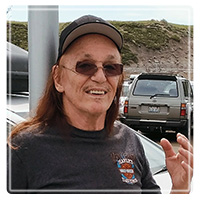
Anger Therapist
Paul Sussman, Ph.D.,R.Psych.(AB),L.Psych.(GA)
Licensed Psychologist, Alberta and Georgia
In T8A 3M7 - Nearby to Fort Saskatchewan.
Anger management problems emerge from a social system where both genders are taught that expression of anger is inappropriate. Anger is one of seven basic human emotions and is in no way dangerous, unfeminine, or taboo. Explosive anger typically emerges when people attempt to keep their anger from others, holding it inside until they can no longer contain it. My approach is to model and practice graded expression of anger, and to help people modify the point(s) of view from which anger is seen to emerge.

Anger Therapist
Nest Integrative Wellness, Inc.
RSW, CCC
In T5N 1S3 - Nearby to Fort Saskatchewan.
At Nest, we recognize that rage is usually a symptom and not the source of a problem. We work with individuals and families to address the root causes of rage in parenthood and provide tools and support to help those struggling with anger to manage. We understand how impactful rage can be and provide a non-judgemental and supportive space for you to explore your emotions.

Anger Therapist
Coltan Thompson, MEd, MSc
Registered Psychologist
In T5K 2J1 - Nearby to Fort Saskatchewan.
Anger is a commonly misunderstood emotion. It is often masking other emotions or is trying to tell you something useful but in a destructive way. I will help you to understand where your anger is rooted and address it by: teaching ways to react differently, providing coping skills, guiding you in in experiencing other emotions, processing any traumas that might be related, addressing related relationship concerns, or by using other approaches that fit your unique situation and needs.

Anger Therapist
Tamara Hanoski, Ph.D, R.Psych
Registered Psychologist
In T6B 3J4 - Nearby to Fort Saskatchewan.
Many of us have not been taught the tools and strategies that are needed to manage anger in a healthy and appropriate manner. While anger is a natural emotion, which can serve as a helpful signal that something is "just not right," it is often handled in a poor manner. I help people to see the maladaptive patterns and strategies they have been using to express their anger, and then replace these with healthier ones. We also work to unload built up frustration, resentment, and hurt, which often reaches a "breaking point" and needs to be resolved so that it does not come out as uncontrolled anger. By doing this, clients can reach a more peaceful place, and will come to see anger in a new way.

Anger Therapist
Sara Jungen, Psychologist
M.A., R.Psych. - Registered Psychologist
Available for Online Therapy
It often feels like Anger arises without warning. Before we know it, we are in the midst of an angry outburst. It doesn't need to be this way! At Menla Psychological Counselling you will learn ways to regain control of your anger, rather than having it control you. The goal of anger management isn't to get rid of anger, it is a valid emotion after all, but rather to stop anger from causing chaos and pain in your life.

Anger Therapist
Rued-Fraser Psychology Services, MSc
Registered Psychologist
Available for Online Therapy
With extensive experience in anger management, I provide evidence-based therapy exclusively via secure online sessions. Together, we explore triggers, strengthen emotional regulation, and develop healthier ways to respond to challenging situations. By applying EMDR, DBT, and emotion-centered strategies, I help you create tools that decrease impulsive reactions and support stronger, more connected relationships—all through a virtual platform that mirrors the benefits of face-to-face therapy.

Anger Therapist
Hilda Huj, B.A., M.A.
Registered Clinical/Counselling and Forensic Psychologist
In T5K 1C5 - Nearby to Fort Saskatchewan.
I will use an integrative approach, tailored to suit your needs, experiences, and personal circumstances, in order to deal with you anger on a positive way. Together we will find and employ the most appropriate techniques that will help you menage your anger and tame your tamper. By doing so, your anger will again become just a normal, healthy, human emotion; not a problem.

Anger Therapist
Laurence Zalmanowitz, M.Ed, R.Psych
Registered Psychologist
In T5K 1C5 - Nearby to Fort Saskatchewan.
Anger is a complex emotion because it can occur for a variety of reasons and sometimes it's tough to tell why you feel angry in a given moment. Managing your anger involves understanding not only the situational events that triggers it but also the underlying emotions that end up being expressed as anger. This involves taking a closer look at other feelings (primary emotions) and learning how to cope with them so that they don't present as anger, which is a secondary emotion.

Anger Therapist
Paul Bianchini, Ph.D., R.Psych.
Registered Psychologist
In T6C 2S1 - Nearby to Fort Saskatchewan.
Anger is taboo. So when we get angry there are very few templates available to teach us how to manage it. It can have unimaginable force and scare us. What might it be capable of? The goal is to create safe conditions to explore it and find out what it is telling us. Then we can learn to express it and create conditions where we have ownership. Visit my website at www.prairieowlpsychology.ca from more details.
You have Found the Best Anger Management Therapists in Fort Saskatchewan, AB.
Thank you for visiting our Alberta page of anger counsellors in Fort Saskatchewan, Alberta who are experienced in therapy and treatment for anger issues. Ask your provider about classes or workshops in addition to individual sessions to help with issues relating to anger. Begin your new journey today.
Fort Saskatchewan is located in Alberta, Canada. It has a land area of 48.18 square kilometers. The population of Fort Saskatchewan is 24,149 people with 9,261 households . The population ranking for Fort Saskatchewan is #177 nationally and #17 for the province of Alberta with a density of 501.30 people per sq km. Fort Saskatchewan therapists serve postal code: T8L.